
 English
 中文简体
 русский
 Français
 Español
 عربى
 CONTACT US


Choosing Carbon Molecular Sieve for Industrial Purging & Displacement: Selection Guide
2026-10-10
Content
If you work around storage tanks, reactors, or transfer lines, you already know that a clean, dry, oxygen-free atmosphere is not a luxury. It is a safety requirement and a quality control step. Industrial purging and displacement is the routine practice of removing unwanted gases or moisture from a vessel before it goes into service, and nitrogen generated on site is one of the most practical ways to do it. The adsorber at the heart of that nitrogen generator often uses a carbon molecular sieve, and that little detail makes a big difference in how reliably the purge performs.
What Industrial Purging and Displacement Really Means
Purging and displacement are related but not identical. Displacement is the process of pushing one gas out of a space with another gas, usually an inert one. Purging is broader: it can mean sweeping, diluting, or cycling a vessel until the target atmosphere is reached. In both cases, the goal is to lower oxygen, moisture, or hydrocarbon content to a safe or specification-driven level.
Plants use nitrogen for these tasks because it is inert, readily available through pressure swing adsorption (PSA), and easy to control. The nitrogen does not react with most process fluids, so it will not create unwanted byproducts. It simply occupies the space, carries away the unwanted gas, and then leaves behind a stable environment.
Why Carbon Molecular Sieve Is a Good Fit for Purging Duty
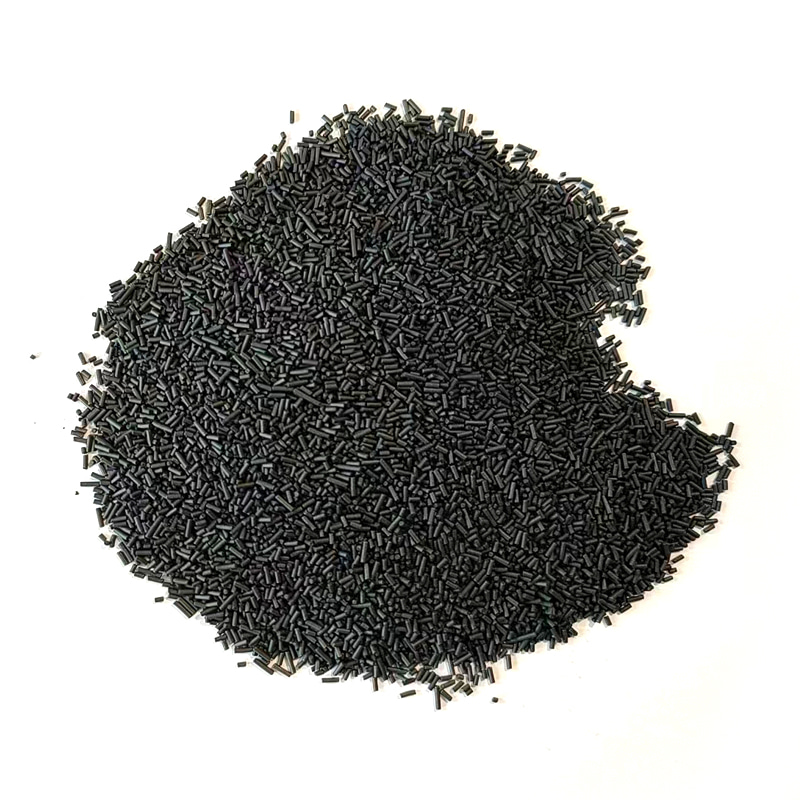
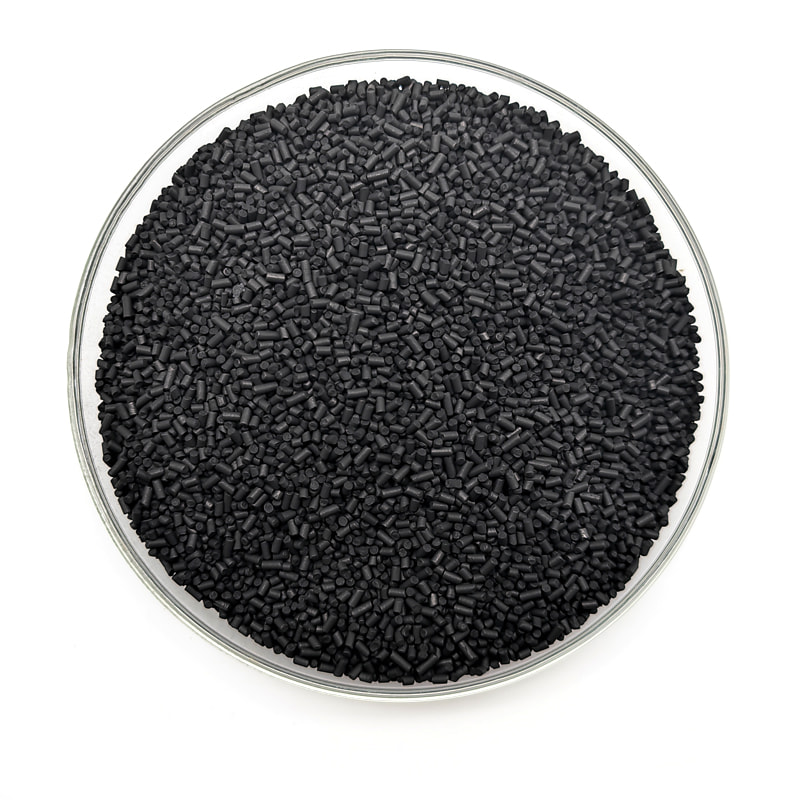 Carbon Molecular Sieve for PSA Nitrogen SeparationSelective adsorbent for PSA nitrogen generation, with uniform pores that let oxygen diffuse faster than nitrogen in separation systems.View Product →
Carbon molecular sieve (CMS) is a specialized adsorbent with a very narrow pore size distribution, typically in the range that allows oxygen molecules to diffuse into the pores much faster than nitrogen molecules. That difference in diffusion speed is the basis of PSA nitrogen generation. When compressed air passes through a CMS bed, oxygen is temporarily captured while nitrogen continues through as product gas.
Compared with activated carbon, CMS is not designed primarily for adsorbing heavy organics or color bodies. Its strength is kinetic separation of oxygen and nitrogen. Activated carbon has a wider pore range and is often used for purification, solvent recovery, and odor control. If your goal is a steady stream of 95% to 99.999% nitrogen for purging, CMS is the more targeted choice. If your goal is removing trace organics from a liquid stream, activated carbon may be the better tool. Knowing the difference helps you avoid overspending on the wrong adsorbent.
Key Performance Factors When Selecting CMS
Not all carbon molecular sieves behave the same way in a real PSA system. Several factors determine whether your purging routine will be smooth or frustrating.
| Factor | What It Means | Typical Range or Note |
|---|---|---|
| Nitrogen purity | Oxygen content remaining in the product gas | 95% to 99.999% depending on system design |
| Pore structure | Uniform micropores for oxygen/nitrogen kinetic separation | Critical for fast cycle times |
| Bulk density | Mass of adsorbent per unit volume | Affects bed size and pressure drop |
| Crush strength | Resistance to mechanical breakdown | Important for long service life |
| Moisture sensitivity | Water can block pores and reduce capacity | Dry feed air is essential |
When you evaluate a CMS for purging, ask for the adsorption isotherm, the expected cycle time, and the recommended operating pressure. A supplier who understands your displacement volume can help you size the generator correctly instead of leaving you with a system that never quite reaches the target purity.
Practical Purging and Displacement Tips
Even with good CMS, the results depend on how you run the purge. These steps are worth building into your standard procedure.
- Isolate the vessel and confirm that all energy sources and feed lines are locked out.
- Depressurize slowly to avoid drawing air back into the system through seals or vents.
- Connect the nitrogen supply at the lowest point and the vent at the highest point so the inert gas pushes the original atmosphere out.
- Introduce nitrogen at a controlled rate. Too fast and you create turbulence that mixes gases instead of displacing them.
- Monitor oxygen or moisture at the vent. Continue purging until the reading stays within specification for the required hold time.
- Seal the vessel under a slight positive nitrogen pressure to prevent air ingress during the next process step.
For large vessels, a pressure-hold test after purging can reveal leaks that would otherwise ruin the atmosphere overnight. It is a simple step that saves a lot of rework.
Common Questions from Plant Engineers
How pure does nitrogen need to be for purging?
It depends on the flammability or reactivity of the process fluid. Many hydrocarbon purges target 1% to 2% oxygen or lower. For sensitive catalysts or food-grade applications, you may need 99.9% or higher. The CMS system should be selected around that target, not the other way around.
Can I use the same CMS for different purging jobs?
Yes, within its design range. A CMS that produces 99.9% nitrogen at a given flow can often run at lower purity and higher flow for less demanding purges. The trade-off is usually cycle time and product flow. Your generator controls the balance.
How long does carbon molecular sieve last?
With clean, dry feed air and proper maintenance, CMS beds can last for many years. Contamination from oil carryover or water is the most common cause of early replacement. Good filtration and a reliable dryer are not optional accessories; they are part of the CMS system.
What is the main difference between CMS and activated carbon for gas separation?
CMS relies on tiny, uniform pores that separate oxygen and nitrogen by diffusion speed. Activated carbon has a broader pore structure and is generally used for adsorbing larger molecules, odors, and organic vapors. For nitrogen generation, CMS is the standard adsorbent.
How We Support Your Purging Projects
We are Anhui Zhuoxu New Material Technology Co., Ltd., a manufacturer of porous carbon materials based in Xuancheng, Anhui. Our parent group, Huiya Group, has been active in gas separation and material production for years, and we have built our first-phase plant around 4,000 tons per year of porous carbon materials. That includes the carbon molecular sieve we supply for PSA nitrogen systems. Our second-phase project is scheduled to come online in 2026 with an additional 3,000 tons per year of porous carbon capacity, aimed at PSA and new energy applications.
We do not just sell a material and walk away. Our team can discuss your industrial purging and displacement requirements, from target purity to vessel volume, and help you match the right CMS grade to your generator. If you are new to the topic, our article on what carbon molecular sieve is and why it matters is a good place to start. For a deeper look at our CMS product, the product page has the technical details you need.
We work with customers across Asia, South America, the Middle East, and Southeast Asia, and we hold ISO 9001 certification with 21 core patents related to porous carbon technology. If you are planning a purge or displacement project, we are happy to talk through the numbers with you.
Carbon molecular sieve is not a magic pellet, but it is a remarkably effective tool when it is applied to the right job. Industrial purging and displacement rewards careful planning: choose the right adsorbent, dry the feed air, control the nitrogen flow, and verify the atmosphere before you commit to the next process step. If you keep those basics in mind, your CMS nitrogen system will deliver the inert atmosphere you need, shift after shift.



 E-mail
anhuilisa@126.com
 Phone
+86 18603224420
 Address
No. 26 Kunshan Road, Xuanzhou Economic Development Zone, Liqiao Town, Xuanzhou District, Xuancheng City, Anhui Province, P.R.China
Copyright Anhui Zhuoxu New Material Technology Co., Ltd. All rights reserved.
 Carbon Molecular Sieve Manufacturer Carbon Molecular Sieve Supplier