
 English
 中文简体
 русский
 Français
 Español
 عربى
 CONTACT US


Carbon Molecular Sieve for Nitrogen Generators: A Practical Selection Guide
2026-10-13
Content
Anyone who has spent a morning watching a nitrogen analyzer drift knows the feeling: the compressor is healthy, the generator is running, and yet purity creeps down a little every week. More often than not, the answer is sitting in the two steel vessels behind the control panel. Carbon molecular sieve is the quiet workhorse of PSA nitrogen generation, and it has more influence over your gas quality than almost any other component in the system.
What a Carbon Molecular Sieve Actually Does
Air is roughly 78% nitrogen and 21% oxygen, and the two molecules are frustratingly similar in size. A carbon molecular sieve separates them by speed rather than by chemical preference. Both gases diffuse into the material's micropores, but oxygen, with the smaller kinetic diameter of about 0.346 nm against nitrogen's 0.364 nm, slips inside several times faster. Pressurize a packed bed with compressed air and, for a brief window, the oxygen disappears into the carbon while nitrogen travels straight through to the buffer tank.
Once the pores begin to fill, the vessel is depressurized and a small amount of product nitrogen is pushed back through the bed to sweep the oxygen out. Two beds alternating between adsorption and regeneration produce a continuous stream. The steadiness of that rhythm, and the sieve's ability to hold the same diffusion rate after hundreds of thousands of cycles, is what separates a generator that runs for a decade from one that needs a refill every two years.
The Properties That Genuinely Matter
A specification sheet will hand you a dozen numbers. These are the six that change how a generator behaves in daily operation.
| Property | Typical Range | What It Changes |
|---|---|---|
| Oxygen adsorption capacity (Nml/g) | 20 to 30 | How much nitrogen a given bed produces before switching |
| Bulk density (g/L) | 640 to 700 | How much sieve mass fits inside the vessel you already own |
| Crushing strength (N) | 60 to 100 | Resistance to the pressure cycling that slowly turns pellets into dust |
| Particle diameter (mm) | 1.0 to 2.0 | Trade-off between pressure drop and packing efficiency |
| Ash content (%) | 1.0 or lower | Pore blocking, dust generation and long-term stability |
| Moisture content (%) | 1.0 or lower | Water competes for the same pore openings as oxygen |
Matching the Grade to the Application
Not every nitrogen user needs the same gas, and purity targets drive the amount of sieve, the cycle time and ultimately the cost per cubic meter:
- 99.5% to 99.9%: tire inflation, general purging, tank blanketing and displacement duties
- 99.9% to 99.99%: food packaging, laser cutting, metal heat treatment and furnace atmospheres
- 99.999% and above: electronics and semiconductor lines, pharmaceutical processes and laboratory carrier gas
Pushing purity upward is never free. Moving from 99.9% to 99.999% usually means a larger sieve inventory, a shorter half-cycle and a higher air-to-nitrogen ratio, which in turn means a bigger compressor and a higher electricity bill. If most of your demand is line blanketing and vessel displacement rather than a critical process atmosphere, it is worth reviewing industrial purging and displacement requirements before paying for a premium grade; a mid-range material often delivers more usable gas per dollar in those duties.
At the other end of the spectrum, semiconductor, pharmaceutical and laboratory duties are often measured in single-digit parts per million of residual oxygen. Those projects call for a tightly specified, high-density grade and a cycle design that keeps the beds comfortably inside their operating window, so it pays to understand the differences between standard and ultra-high-purity grades before the vessel dimensions are frozen.
How Cycle Design and the Sieve Work Together
Bed Sizing and Cycle Time
A common mistake is treating the sieve as a drop-in consumable. Two beds sized for a 60-second half-cycle behave very differently from the same beds on a 30-second half-cycle. Shorter cycles squeeze out higher purity but reduce the useful output per kilogram of material, and they stress the pellets harder. Longer cycles do the opposite. When you replace a sieve, matching the new material's density and adsorption kinetics to the existing valve timing matters more than matching the brand name printed on the bag.
Air Preparation Is Not Optional
Carbon molecular sieve is not a filter. Oil aerosol, water droplets and fine particulate all coat the micropore openings and permanently reduce capacity, and no amount of regeneration will clean them out. A properly designed train, with a coalescing filter, a refrigerated or desiccant dryer and a final dust filter downstream of the beds, costs a fraction of a sieve refill. Inlet air temperature matters as well: adsorption kinetics speed up as the air warms, but the practical capacity of the bed falls, which is why most PSA systems are happiest with inlet air held between roughly 20 and 35 degrees Celsius.
Mistakes We See Most Often
- Buying on price per kilogram alone, without comparing bulk density and oxygen adsorption capacity
- Replacing one bed and leaving the other in service, which unbalances the cycle
- Chasing a purity problem with a higher grade when the real cause is a leaking valve or a drifted cycle time
- Ignoring a rising pressure drop, which is usually the first sign of fines and pellet breakdown
- Running past the expected service life, since sieve rarely fails suddenly; output simply shrinks month by month
Choosing a Carbon Molecular Sieve Supplier
Because the material degrades slowly rather than failing outright, supplier quality tends to show up in year three rather than on day one. Batch-to-batch consistency in density, crushing strength and adsorption capacity is what keeps a generator's performance predictable, so it is worth asking for a certificate of analysis on the actual lot you receive instead of a generic datasheet.
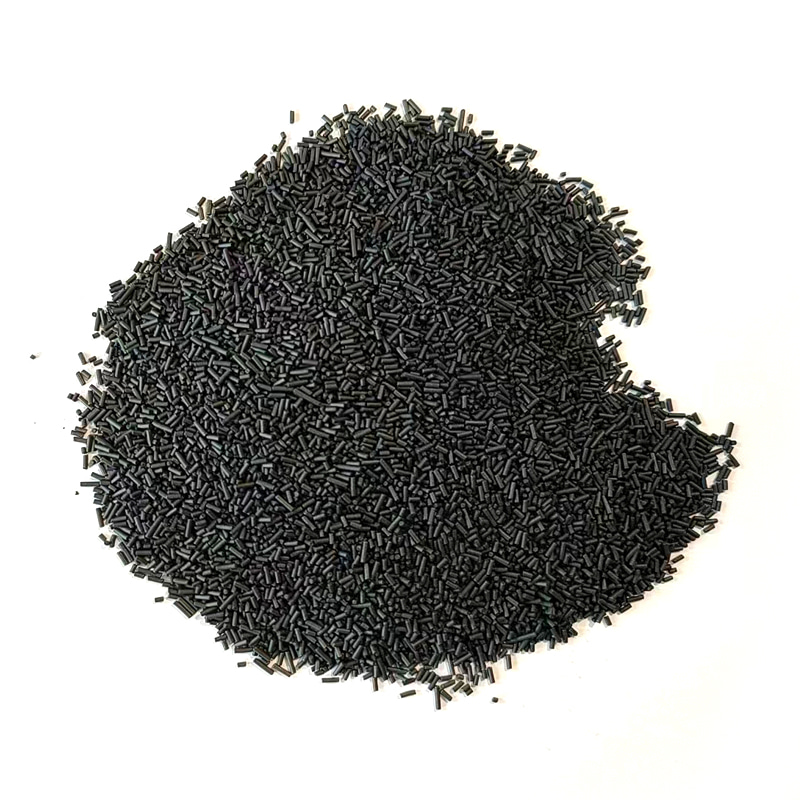
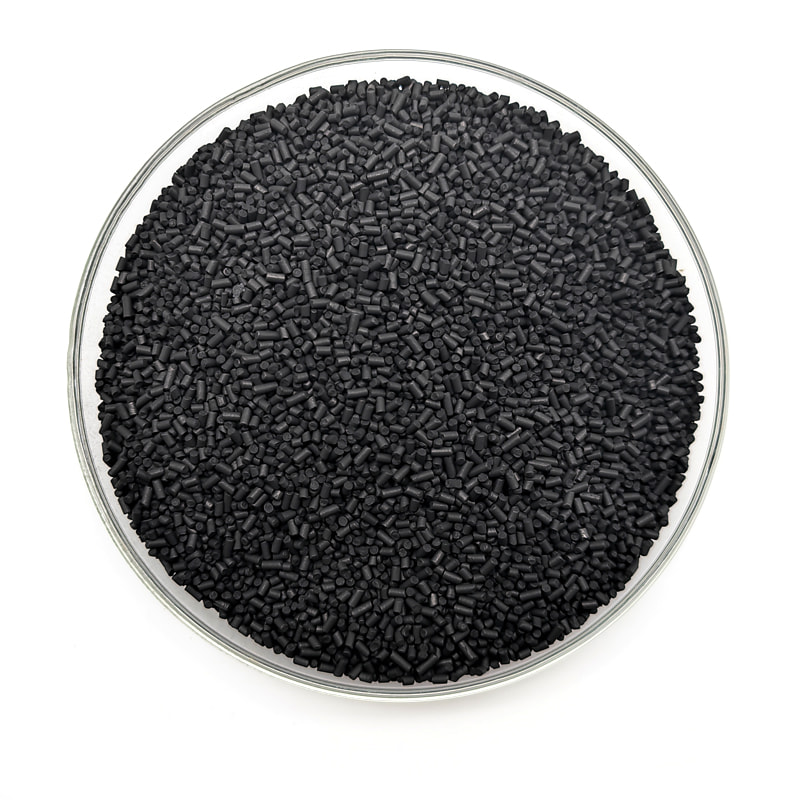 Carbon Molecular Sieve for PSA Nitrogen GenerationSelective carbon molecular sieve for PSA nitrogen generation, with models including CMS-240, CMS-260, CMS-280 and CMS-330; consistent quality supports predictable performance.View Product →
We produce carbon molecular sieve at our base in Xuancheng, Anhui Province, where the first phase of our porous carbon plant runs at 4,000 tonnes per year and a second 3,000-tonne line is scheduled to come online in 2026. The material is covered by ISO 9001 and 21 core patents, and our team works with customers on the practical side as well: bed sizing, cycle tuning and troubleshooting generators already in service. Because we also handle nitrogen equipment and service, we tend to look at a sieve question as a system question rather than a bag of pellets.
Choosing carbon molecular sieve for a nitrogen generator is less about finding the single best grade on the market and more about matching a material to your purity target, your cycle design and the air quality upstream of the beds. Get those three aligned and the sieve will quietly do its job for years. Get them wrong and no grade will rescue the output. If you are sizing a new system or replacing a bed that has lost its edge, we are always glad to walk through the numbers with you.



 E-mail
anhuilisa@126.com
 Phone
+86 18603224420
 Address
No. 26 Kunshan Road, Xuanzhou Economic Development Zone, Liqiao Town, Xuanzhou District, Xuancheng City, Anhui Province, P.R.China
Copyright Anhui Zhuoxu New Material Technology Co., Ltd. All rights reserved.
 Carbon Molecular Sieve Manufacturer Carbon Molecular Sieve Supplier