
 English
 中文简体
 русский
 Français
 Español
 عربى
 CONTACT US


Carbon Molecular Sieve for Semiconductor Nitrogen: A Fab-Focused Selection Guide
2026-11-05
Content
- 1 Why Semiconductor Nitrogen Demands More Than a Generic CMS
- 2 How CMS Fits into a Semiconductor Nitrogen PSA System
- 3 Key Selection Criteria for Semiconductor-Grade Nitrogen
- 4 Purity, Dew Point, and the Hidden Cost of Shortcuts
- 5 Installation, Startup, and Replacement Planning
- 6 What We Bring to Semiconductor Nitrogen Projects
- 7 Practical Checklist Before You Specify CMS
Semiconductor fabs do not buy nitrogen as a commodity alone; they buy continuity. Nitrogen blankets, purges, carrier gas, and tool cooling all depend on a supply that stays inside tight oxygen and moisture limits shift after shift. In a pressure swing adsorption (PSA) generator, the carbon molecular sieve for semiconductor nitrogen sits at the center of that promise. It is the adsorbent that separates oxygen from air, and its condition often decides whether the generator delivers quiet, stable purity or becomes a source of drift, downtime, and requalification work.
Why Semiconductor Nitrogen Demands More Than a Generic CMS
At first glance, carbon molecular sieve is a simple black adsorbent. In a fab, it is part of a purity chain. A generic nitrogen grade may reach 99.9% or 99.99% and still leave trace oxygen or moisture that matters for wafer handling, glove boxes, or sensitive thermal steps. Semiconductor nitrogen specifications usually combine high purity with low dew point, stable pressure, low particle shedding, and predictable response to changes in flow.
Those requirements push back into the CMS: pore size distribution must be tight, crush strength must survive repeated cycling, and dust must be controlled so filters and downstream components are not overloaded. We have learned to treat batch consistency as a specification, not a paperwork detail. Small changes in activation or pore structure can shift the working capacity enough to change purge time and purity margin.
Because fabs use nitrogen across many tools and utility loops, the right question is not “what is the lowest-cost sieve?” but “which CMS keeps our purity margin stable at the real duty cycle?” This is where semiconductor nitrogen applications should be reviewed alongside the PSA design, not after the generator has been sized.
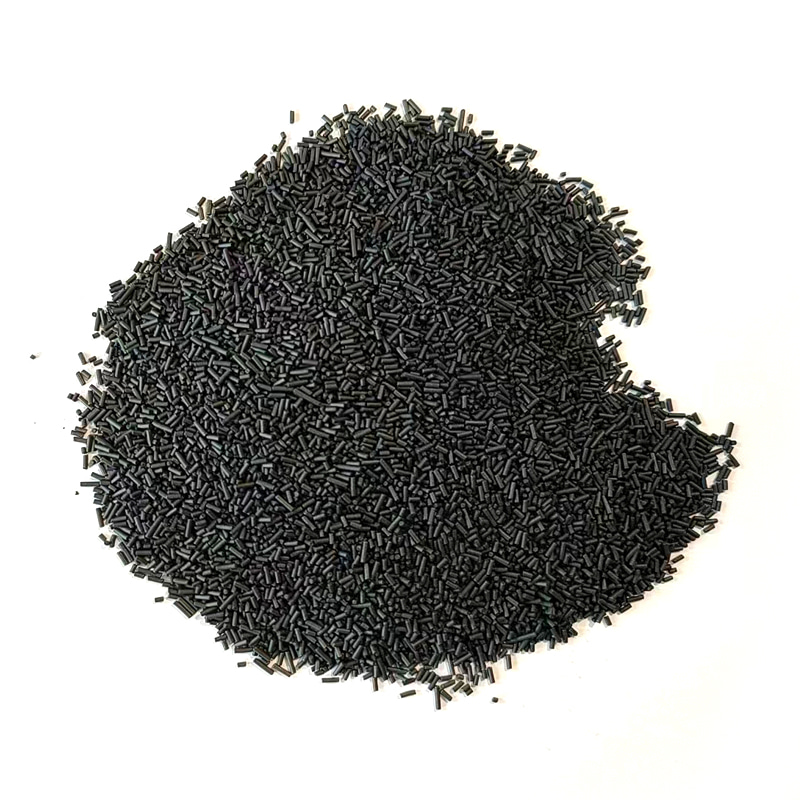
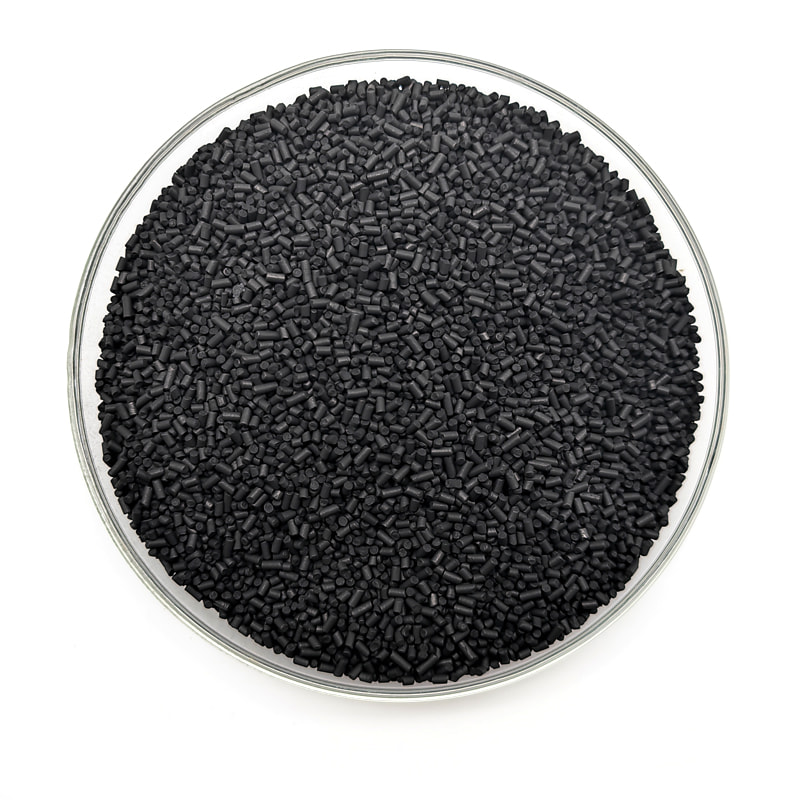 Carbon Molecular Sieve for PSA Nitrogen GenerationCarbon molecular sieve for PSA nitrogen generation, with model-dependent purity up to 99.999%; review it alongside semiconductor nitrogen PSA design.View Product →
How CMS Fits into a Semiconductor Nitrogen PSA System
PSA nitrogen generation relies on kinetic separation. Oxygen molecules diffuse faster into the carbon molecular sieve pores, while nitrogen passes through the bed. In the adsorption step, oxygen is held; in regeneration, pressure is released and the bed is cleaned for the next cycle. Two beds usually alternate so the fab sees continuous flow. The CMS is only one part of the system, but it is the part that sets the purity ceiling.
Upstream, compressed air must be dried and filtered. Moisture, oil carryover, and particulates can blind pores or create dust, and no CMS can compensate for poor pretreatment. Downstream, buffer capacity and online analysis protect the process from short-term excursions. If you are mapping the utility chain, it helps to compare how fabs approach on-site nitrogen with the way your own demand profile changes across shifts and process tools.
Four checks matter in system design:
- Air quality: dew point, oil carryover, and filtration performance before the beds.
- Cycle design: adsorption time, purge flow, and valve sequencing for the real load.
- Bed protection: dust control, pressure drop, and proper filling practice.
- Monitoring: oxygen, dew point, flow, and pressure trends at the point of use.
Key Selection Criteria for Semiconductor-Grade Nitrogen
Use the table below as a selection conversation, not a substitute for site data or a pilot test.
| Selection area | What to verify | Why it matters in fab nitrogen |
|---|---|---|
| Pore structure | Tight O2/N2 selectivity and reproducible working capacity | Sets purge time and purity margin |
| Crush strength | Compression test, dust level, and handling loss | Beds see repeated pressurization; weak granules create fines |
| Pretreatment fit | Moisture and hydrocarbon protection in the full system | Protects service life and avoids early breakthrough |
| Pressure drop | Uniform granule size and low fines after filling | Supports stable flow and lower compressor demand |
| Batch records | COA, traceability, and retained sample | Reduces commissioning surprises |
| Service support | Startup checks and replacement guidance | Keeps purity drift from becoming downtime |
Purity, Dew Point, and the Hidden Cost of Shortcuts
Semiconductor nitrogen is often discussed as a purity percentage, but the process cares about what is left in the gas. Trace oxygen can oxidize surfaces; moisture can affect adhesion, corrosion, or instrument response. A PSA generator can show 99.999% on a display while a local tool still sees a dew point or particle issue. That is why CMS selection should be tied to the full system: dryer performance, filter condition, cycle time, flow turndown, and analyzer placement.
Shortcuts usually appear in three places: buying CMS on a price-per-kilogram basis without checking batch data, extending bed life beyond its useful capacity, and changing the operating cycle to chase capacity. Each can create a purity margin that looks acceptable on day one and disappears under a weekend load or a hot day. Our view is simple: size the bed for the real duty, keep the pretreatment honest, and monitor the trend, not just the alarm.
Installation, Startup, and Replacement Planning
Carbon molecular sieve is not a fit-and-forget item. In a well-designed PSA system, a bed may last around five to seven years, but that is an industry planning range, not a guarantee. Actual life depends on air quality, cycling frequency, temperature, and how well the system is maintained. Replacement should be triggered by performance trends: falling purity at the same flow, longer purge, higher oxygen breakthrough, more frequent valve cycling, or increasing pressure drop. If the analyzer is stable but the compressor is working harder, the bed may be telling you something.
Startup matters as much as the material. We recommend documenting the initial purity, dew point, flow, pressure, and cycle time, then using those values as the baseline. New CMS should be protected from moisture during storage and handling. During filling, avoid excessive drop height that creates fines. After startup, check filters for dust and confirm that the cycle is not being pushed beyond the design.
Keep a replacement file with:
- Baseline purity, dew point, flow, and pressure data.
- Filter change history and any oil carryover events.
- Cycle time changes and valve maintenance records.
- Batch details for the installed CMS and the proposed replacement.
What We Bring to Semiconductor Nitrogen Projects
Anhui Zhuoxu New Material Technology operates a production base in Xuancheng, Anhui, with a focus on porous carbon materials. Our first-phase facility was built for 4,000 tonnes per year of porous carbon material, and our second-phase 3,000-tonne porous carbon project is planned for 2026. We work within an ISO 9001 quality framework and hold 21 core patents, according to our company information. Our products serve customers in China and are exported to Asia, South America, the Middle East, and Southeast Asia.
Within the group, we describe our position as a closed-loop chain that connects porous carbon materials with nitrogen equipment services. For semiconductor nitrogen projects, that means we can discuss the carbon molecular sieve, the PSA operating conditions, and the practical service questions together. We also know when a project needs more than a material quote. If the application is sensitive to dew point, particle control, or turndown, say so early; it changes the specification.
Practical Checklist Before You Specify CMS
- Define purity, dew point, flow, pressure, and turndown at the point of use, not only at the generator outlet.
- Share the pretreatment scheme: dryer type, filters, oil carryover control, and air quality history.
- Ask for batch-level data and a retained sample for the grade you will receive.
- Confirm crush strength, dust level, and packing method for your vessel.
- Review cycle time and valve sequencing; a CMS can be blamed for a control issue.
- Plan analyzer calibration and trend review before startup.
- Set replacement triggers by performance, not by a fixed calendar date.
- Keep a commissioning record that includes pressure drop and initial purity.
Send us the duty point and the current trend; we will tell you what we would check first. That conversation is usually more useful than a catalogue number.


 E-mail
anhuilisa@126.com
 Phone
+86 18603224420
 Address
No. 26 Kunshan Road, Xuanzhou Economic Development Zone, Liqiao Town, Xuanzhou District, Xuancheng City, Anhui Province, P.R.China
Copyright Anhui Zhuoxu New Material Technology Co., Ltd. All rights reserved.
 Carbon Molecular Sieve Manufacturer Carbon Molecular Sieve Supplier