
 English
 中文简体
 русский
 Français
 Español
 عربى
 CONTACT US


Carbon Molecular Sieve for Pipeline Debris Removal: Nitrogen Purging Guide
2026-10-26
Content
- 1 Why Nitrogen Beats Air or Water for Line Cleaning
- 2 What the Carbon Molecular Sieve Is Doing Inside the Generator
- 3 Matching Purity to the Cleaning Job
- 4 Sizing a CMS System Around a Pipeline Campaign
- 5 Where CMS-Based Nitrogen Fits in Real Pipeline Work
- 6 Choosing a Sieve Grade That Survives Site Conditions
- 7 A Short Pre-Mobilisation Checklist
A pipeline that has just been welded, hydrotested or pulled out of service is never clean. Mill scale, weld slag, sand, rust flakes, dried product and residual hydrocarbons settle in low points, behind valves and in dead legs. Before the line can be commissioned, or handed back after maintenance, that material has to come out, and the gas used to move it matters as much as the pig or the swab behind it.
Nitrogen has become the default medium for this work. It is inert, dry and oil-free, and it can be generated on site from compressed air instead of delivered by tanker. The carbon molecular sieve at the heart of a PSA nitrogen generator is what makes that on-site supply practical, and it is also the component that decides how much gas you get, at what purity, and how long the system keeps performing on a busy site.
Why Nitrogen Beats Air or Water for Line Cleaning
Compressed air is cheap and always available, but it brings oxygen into a line that may still hold hydrocarbon residue. Inside the flammability envelope, that combination is exactly what pipeline crews spend their day trying to avoid. Air also carries moisture, which undoes the drying work you just finished and starts new corrosion on a clean internal surface.
Water has the opposite problem. It is excellent at flushing loose debris, but every litre left behind has to be removed before commissioning, and wet low points become corrosion sites within days.
Nitrogen sidesteps both issues. A dry nitrogen push carries debris ahead of the pig without feeding oxygen to any residue, and it leaves the line with a low dew point. It also covers the steps that follow debris removal: air displacement, inerting before hot work, leak testing and preservation blanketing. One gas, one generator, one consistent quality standard from the first pig run to handover.
What the Carbon Molecular Sieve Is Doing Inside the Generator
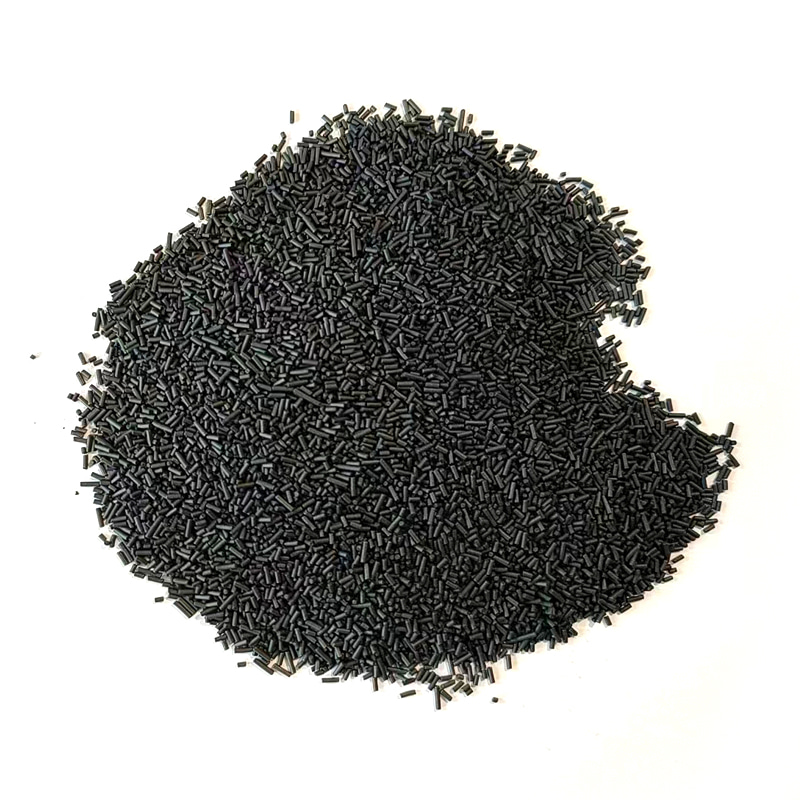
Carbon molecular sieve is a porous carbon with a very narrow pore size distribution, typically in the range of a few angstroms. That pore structure does not separate oxygen and nitrogen by simple adsorption equilibrium. It separates them by speed. Oxygen molecules are slightly smaller and diffuse into the carbon micropores far faster than nitrogen does, so during a short pressurised adsorption step the oxygen is captured and the nitrogen passes through as product gas.
A PSA generator uses two or more beds of the material, alternating between adsorption at pressure and regeneration by controlled depressurisation. Cycle times are measured in seconds, which is why valve reliability and sieve quality both matter so much. The bed does the chemistry; the valves and control logic decide whether the bed gets the time it needs.
For pipeline work, this architecture has two practical advantages. First, generation happens where the work happens, so a remote spread or a compressor station does not depend on liquid nitrogen deliveries. Second, the purity is adjustable within the design envelope of the unit, so a crew can run high flow at moderate purity for the bulk push and then tighten up for inerting and handover.
Matching Purity to the Cleaning Job
There is a temptation to specify the highest purity a generator can reach and apply it to every task. That usually costs flow rate and energy for no safety benefit. Pipeline preparation is a sequence of jobs with different requirements, and the nitrogen supply should be tuned to each one.
| Pipeline Task | Typical Nitrogen Purity | What Really Matters |
|---|---|---|
| Pig propelling and bulk debris push | 95-97% | Flow and pressure do the work; purity is secondary |
| Air displacement before commissioning | 97-99% | Enough volume to push oxygen out of every low point |
| Drying after hydrotest | 97-99.5% | Low dew point, verified at the outlet |
| Inerting before hot work or cutting | 97-99.5% | Oxygen readings below the site permit limit |
| Hydrocarbon line purge | 99% and above | Continue until LEL readings fall below target |
| Preservation and blanketing | 99.5% and above | Small, steady flow sustained over long periods |
Reading the table from top to bottom also describes the way a campaign usually runs. High flow early, tighter purity later, and a monitoring routine that proves each stage is complete rather than assuming it.
Sizing a CMS System Around a Pipeline Campaign
Flow, pressure and volume
Debris removal is a volume game. Crews commonly plan to push several line volumes of nitrogen through the section being cleaned, and the pig speed that produces good debris pickup dictates the minimum flow rate. Pressure is a separate question: the generator must overcome line resistance plus the back pressure created by the pig, and a long or small-diameter line can need more pressure than a standard PSA outlet delivers. In that case a booster is added downstream rather than pushing the sieve bed harder than its cycle allows.
Dew point and oil carryover
A carbon molecular sieve will produce excellent dew point figures from a well-prepared feed, but it is not a compressor aftercooler. Moisture and oil aerosol have to be removed upstream with coalescing filters, a dryer and a carbon polishing stage. If oil vapour reaches the sieve bed, it blocks the micropores and the unit quietly loses capacity, which is usually blamed on the material long after the real cause has been forgotten.
Where CMS-Based Nitrogen Fits in Real Pipeline Work
The same generator that cleans a new transmission line also supports industrial purging and displacement duties across plants, terminals and tank farms, where the objective is to move one atmosphere out and replace it with another without ever passing through a flammable mixture. In petrochemical industry settings, that logic extends to unit shutdowns, catalyst handling and vessel entry preparation, all of which rely on the same inert, dry gas supply.
What changes between these jobs is not the chemistry but the logistics: how much gas, at what pressure, for how many hours, and whether the equipment needs to be skid-mounted and moved between locations. Getting those three answers right at the planning stage is worth more than a marginal purity advantage.
Choosing a Sieve Grade That Survives Site Conditions
Not all carbon molecular sieve behaves the same way in a working generator. Three properties tend to separate a grade that lasts from one that disappoints: consistent adsorption capacity from batch to batch, mechanical strength that resists attrition through hundreds of thousands of pressure cycles, and a packing density that lets the vessel hold enough material within its footprint. Dust generation is the practical symptom of a weak grade, because fines migrate, raise pressure drop and eventually contaminate valves downstream.
Our own carbon molecular sieve is produced on a dedicated porous carbon line in Xuancheng, with the same material discipline applied to every batch we ship. You can review the specification, grade options and typical performance envelope on the 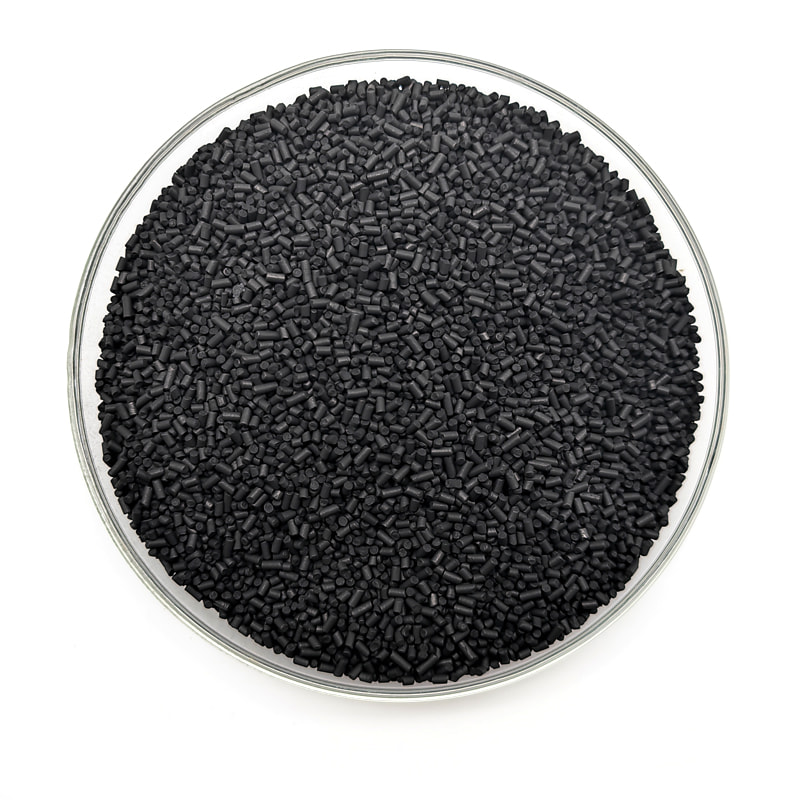 Carbon Molecular Sieve for PSA Nitrogen GenerationCompare CMS grades and purity options to plan PSA nitrogen generation and confirm sizing before vessel selection.View Product → page, and we are happy to talk through the sizing before you commit to a vessel.
A Short Pre-Mobilisation Checklist
Most nitrogen problems on a pipeline job trace back to planning rather than equipment. Before the crew mobilises, it helps to confirm:
- Line volume, segment lengths and the number of line volumes planned per push
- Target purity and dew point for each stage, agreed with the commissioning engineer
- Required flow and pressure at the injection point, including pig back pressure
- Feed air quality, filtration and dryer performance upstream of the sieve beds
- Calibrated oxygen and LEL analysers, plus a dew point meter at the outlet
- Buffer storage and whether a booster is needed for long runs
- Material handling plan for the sieve, including protection from moisture during any intervention
Debris removal is often treated as a rough, dirty stage that sits before the careful work of commissioning. In practice it is the stage that decides whether the careful work succeeds. Dry, inert, oil-free nitrogen, generated reliably on site and sized honestly for the task, turns a difficult clean-up into a predictable one, and a well-chosen carbon molecular sieve is what keeps that supply steady from the first pig run to the final handover.


 E-mail
anhuilisa@126.com
 Phone
+86 18603224420
 Address
No. 26 Kunshan Road, Xuanzhou Economic Development Zone, Liqiao Town, Xuanzhou District, Xuancheng City, Anhui Province, P.R.China
Copyright Anhui Zhuoxu New Material Technology Co., Ltd. All rights reserved.
 Carbon Molecular Sieve Manufacturer Carbon Molecular Sieve Supplier