
 English
 中文简体
 русский
 Français
 Español
 عربى
 CONTACT US


Carbon Molecular Sieve for Petrochemical Industry: A Plant Engineer's Guide
2026-10-20
Content
- 1 What the Carbon Molecular Sieve Is Doing Inside Your Unit
- 2 Where Carbon Molecular Sieves Earn Their Place in a Petrochemical Plant
- 3 Not All Grades Are Interchangeable
- 4 A Practical Selection Checklist
- 5 Protecting Bed Life in a Demanding Plant
- 6 Working With a Partner Who Sees the Whole Loop
- 7 Questions We Hear Most Often
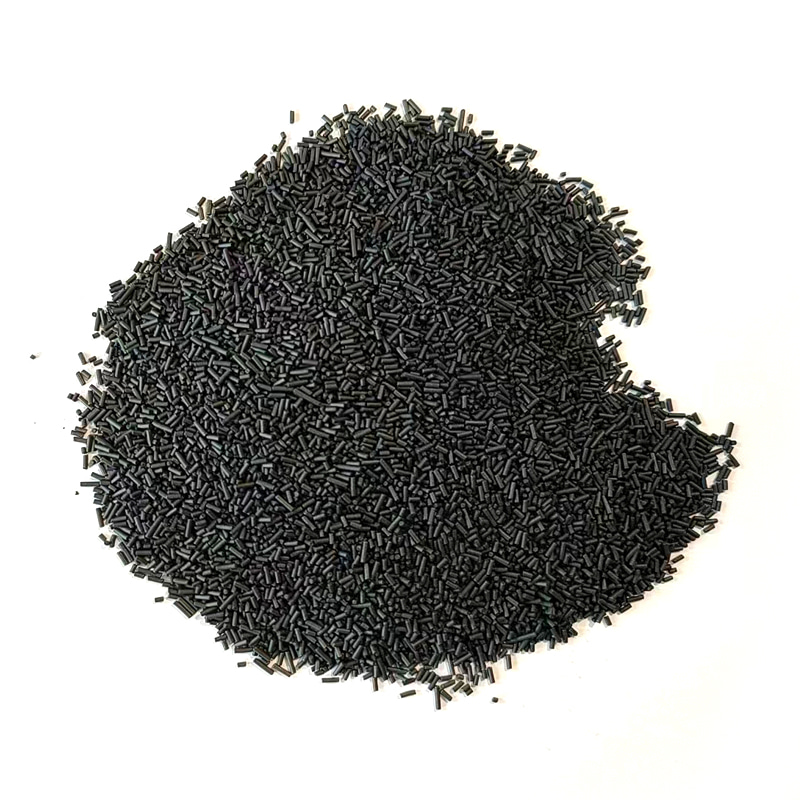
Petrochemical plants rarely have a quiet minute. Hydrogen is being recovered on one train, a reactor is waiting for nitrogen blanking on another, and somewhere a compressor is asking for cleaner recycle gas. Carbon molecular sieve sits quietly in the middle of all of it: a few tonnes of hard black granules that decide how well the separation actually works. We have spent years making these materials and the nitrogen systems that surround them, and this is roughly the conversation we have with plant engineers before a first order.
What the Carbon Molecular Sieve Is Doing Inside Your Unit
The name is accurate but not very helpful. A carbon molecular sieve (CMS) is a porous carbon whose pore openings are narrow enough, typically in the range of a few tenths of a nanometre, to tell molecules apart by size and by how quickly each one diffuses in. It is not primarily a sponge that soaks up whatever passes by; it is a gatekeeper that favours one gas over another.
That kinetic behaviour is why CMS became the standard medium for PSA nitrogen generation. Oxygen slips into the pores several times faster than nitrogen, so a short pressurisation step delivers a usable nitrogen stream from ordinary compressed air. If you want the longer background, we keep a plain-language primer on what carbon molecular sieve is and why it matters.
In petrochemical service the same property is applied to different gases. A carbon framework is comparatively forgiving of moisture and of mildly acidic streams that punish other adsorbents, and it can be regenerated by pressure swing alone, without steam. That last point counts for a lot when a bed is cycling every couple of minutes, hour after hour, for years.
Where Carbon Molecular Sieves Earn Their Place in a Petrochemical Plant
Talk to process engineers across refineries, olefin plants and fertiliser complexes and the duties start to repeat:
- Nitrogen blanking and purging — tank farms, reactor start-up, pipeline displacement and vapour-space inerting, where a steady on-site supply beats trucked-in liquid.
- Hydrogen recovery — upgrading purge gas and PSA tail gas so that hydrogen returns to the loop instead of going to flare.
- Recycle gas polishing — pulling heavy ends and trace contaminants out of hydrogen-rich streams before they reach the catalyst.
- CO2 and methane adjustment — knocking down CO2 in natural gas treatment or trimming calorific value.
- Feed purification — a protective layer ahead of sensitive downstream adsorbents or membranes.
We map these duties on our petrochemical industry solutions page, and the requirements differ far more than the shared media name suggests. A nitrogen generator at 8 bar and a hydrogen unit at 25 bar are not asking the same thing of the carbon, even if both are called CMS.
Not All Grades Are Interchangeable
Two suppliers can both ship a material labelled carbon molecular sieve and deliver very different results, because what governs PSA performance is not total surface area but the balance between uptake capacity, diffusion rate and mechanical strength. A grade tuned for 95% nitrogen purity in a small generator is not automatically right for a hydrogen bed running at higher pressure on a wetter feed.
| What to compare | Why it changes your result |
|---|---|
| Bulk density | Sets how much media fits a fixed vessel, and therefore the working capacity per cycle. |
| Nitrogen uptake | Drives yield and recovery for a given flow and purity target. |
| Kinetic selectivity | The actual separation mechanism; a value measured at your operating pressure is worth more than a headline figure from someone else's. |
| Crush strength | Weak granules dust under fast cycling, raising pressure drop and forcing early top-ups. |
| Pore uniformity | A narrow pore distribution gives a sharper cut and steadier outlet purity. |
| Ash and moisture | Affects inert load, regeneration behaviour and how the bed copes with upsets. |
| Particle size | The classic trade-off: smaller beads separate faster but cost you pressure drop. |
| Batch consistency | The sieve you buy in year three should behave like the one you validated. |
A Practical Selection Checklist
- Start from the feed, not the datasheet. Record composition, pressure, temperature, water content and heavy hydrocarbon load.
- Write the product specification you actually need — 95%, 99% or higher nitrogen, or a hydrogen purity and recovery pair.
- Fix the cycle before the media. Cycle time, pressure ratio and vessel geometry constrain what any grade can deliver.
- Ask about pretreatment. Coalescing filters, dryers and guard beds prevent most of the failures we see in the field.
- Confirm regeneration limits — how much depressurisation and how much heat the material tolerates.
- Agree acceptance data up front: sample testing, batch records, a documented isotherm at your conditions.
- Plan the top-up. Ask what the expected service life is and what a replacement layer will cost.
Protecting Bed Life in a Demanding Plant
In our experience, the calls we get about underperforming carbon beds are rarely about the carbon itself. They are about what arrived with the gas. Liquid carryover from a knock-out drum, compressor oil mist, heavy hydrocarbons that condense during depressurisation, or an upstream upset that pushes sulphur through — any of these can blind the pore mouths and end a charge early.
A little discipline goes a long way: keep the inlet dew point low, size the pre-filter generously, avoid depressurising faster than the media was specified for, and trend outlet purity rather than waiting for a fixed replacement date. When a bed does drift, isolating which layer is exhausted usually saves the whole charge.
Working With a Partner Who Sees the Whole Loop
Anhui Zhuoxu New Material Technology, a wholly owned subsidiary of Huiya Group, produces porous carbon materials at its base in Xuancheng, Anhui Province. The first phase built 4,000 tonnes per year of porous carbon capacity alongside a floral foam line, and a second phase of 3,000 tonnes is scheduled to come on stream in 2026 with a focus on silicon-carbon anode material and PSA applications. The company holds ISO 9001 certification, reports 21 core patents, and ships to customers across Asia, South America, the Middle East and Southeast Asia.
What matters more practically is that the company sits on both sides of the interface: material production and nitrogen equipment services. That closed loop is useful when a plant needs someone to say honestly whether the problem is the sieve, the vessel, or the valve timing — rather than only selling another drum of granules.
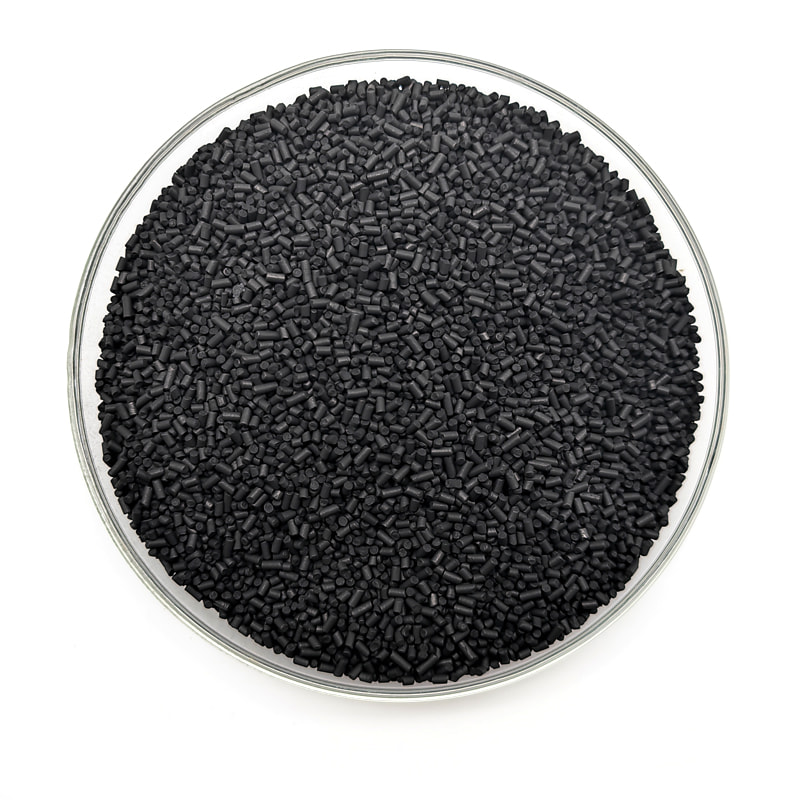 Carbon Molecular Sieve Series for PSA NitrogenReview the CMS-240 to CMS-330 series for PSA nitrogen separation, with purity and production options relevant when matching feed conditions to target purity.View Product →
If you are specifying a charge for a petrochemical duty, send us the feed conditions and the target purity. We will tell you what the carbon can do, what the pretreatment needs to handle, and where the design margins should sit before anything is ordered.
Questions We Hear Most Often
How long does a CMS charge last?
Under clean, dry feed and steady cycling, most petrochemical beds run for several years before performance drifts noticeably. Water slugs, oil carryover and aggressive depressurisation shorten that considerably, which is why the pretreatment question comes up first in every review.
Can carbon molecular sieve be regenerated?
Yes, and pressure swing is the normal mode of operation. Thermal regeneration is possible but carbon is easier to damage with steam than zeolite is, so stay inside the supplier's temperature and steam limits.
Is CMS always better than zeolite for gas separation?
No. Zeolites offer higher capacity and handle certain polar molecules well. Carbon molecular sieve wins where kinetic selectivity, moisture tolerance and pressure-only regeneration matter — which covers a large share of nitrogen and hydrogen duties in petrochemical plants.


 E-mail
anhuilisa@126.com
 Phone
+86 18603224420
 Address
No. 26 Kunshan Road, Xuanzhou Economic Development Zone, Liqiao Town, Xuanzhou District, Xuancheng City, Anhui Province, P.R.China
Copyright Anhui Zhuoxu New Material Technology Co., Ltd. All rights reserved.
 Carbon Molecular Sieve Manufacturer Carbon Molecular Sieve Supplier